Luxury Saga Dawa Journey FOR QUEERS: A 7-Day Immersion in Tibet’s Holiest Festival

Journey: 2026 - 2026 Duration: 7 Days Double Sharing Price: $4600 pp Single Room Price: $5350 pp Limited To: 2-16

The Saga Dawa Festival is the beating heart of Tibetan Buddhism — a sacred month honoring the Buddha’s birth, enlightenment, and parinirvana, collectively known as the Triple Blessed Day. Celebrated for more than a thousand years, Saga Dawa transforms Tibet into a living mandala of devotion: juniper smoke rising from temple courtyards at dawn, pilgrims performing full-body prostrations along ancient kora routes, monks chanting from centuries-old scriptures, and entire communities engaging in merit-making rituals believed to be amplified 100 million-fold during this auspicious time.

This luxury 7-day journey places you inside the festival’s deepest rhythms, combining rich cultural immersion, sacred landscapes, and high-altitude comfort. Stay at the St. Regis Lhasa Resort — your elegant sanctuary in the heart of Tibet — while exploring the spiritual and historic soul of Lhasa: the Potala Palace, Jokhang Temple, Drepung and Sera Monasteries, and the oracle temple of Nechung.

You’ll join Tibetans in living expressions of devotion:

  • Sang offering rituals using juniper branches as a symbolic purification
  • Butter-lamp illumination inside Jokhang, where pilgrims pray before the revered Jowo Buddha
  • Lingkor kora with chanting devotees encircling Lhasa
  • Tsethar (fish release) along the Lhasa River, symbolizing the liberation of all beings

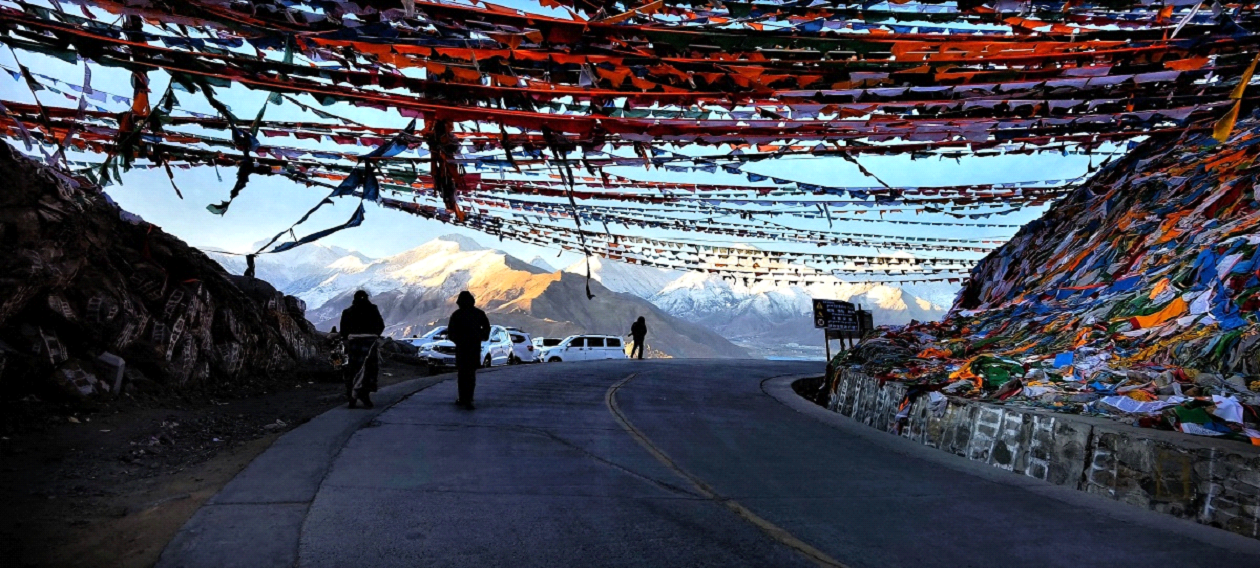
Your journey extends beyond the city to Drak Yerpa, one of Tibet’s oldest meditation retreats, where hermits and masters sought insight in cliffside caves. You’ll hang prayer flags at a mountain pass — a gesture of compassion carried by the Himalayan winds — and enjoy meaningful vegetarian meals aligned with Saga Dawa’s principle of non-harm.

A breathtaking pilgrimage to Yamdrok Lake, one of Tibet’s three holiest lakes, reveals how sacred geography shapes spiritual consciousness. Scenic glacier views, a peaceful river cruise, and an evening at the famed open-air Princess Wencheng performance add layers of natural wonder, history, and artistry.

This is not simply a festival trip — it is a rare opening into the inner life of Tibetan Buddhism, curated with sensitivity, respect, and the luxurious touch that defines Seek & Savor Travel.
.

Upcoming Departures:

  • May 16 – May 22, 2026
  • May 18 – May 24, 2026
  • May 23 – May 29, 2026
  • May 25 – May 31, 2026
  • May 30 – June 5, 2026
  • June 1 – June 7, 2026
  • June 7 – June 13, 2026
  • June 9 – June 15, 2026
  • June 13 – June 19, 2026

Trip Overview

  • Join Tibetans in the sacred observances of Saga Dawa, when positive actions are believed to yield one hundred million times more merit.
  • Participate in powerful rituals including Sang (juniper smoke) offerings, butter-lamp ceremonies, and the compassionate tsethar fish-release tradition.
  • Walk through centuries of Tibetan spiritual and political history inside the Potala Palace, former winter residence of the Dalai Lamas.
  • Experience the deep devotion of Jokhang Temple, Tibet’s most sacred shrine, home to the exquisitely revered Jowo Sakyamuni statue.
  • Join pilgrims on the Barkhor and Lingkor kora circuits, living traditions that reveal the essence of Tibetan faith.
  • Discover the vast intellectual legacy of Drepung Monastery, once the largest monastic university in the world.
  • Visit Nechung Temple, spiritual seat of the State Oracle who once advised Dalai Lamas and Tibetan rulers.
  • Witness the dramatic courtyard debates of Sera Monastery, where monks sharpen philosophical reasoning with dynamic gestures and rhythmic claps.
  • Learn the sacred geometry and symbolism behind Buddhist art in a Thangka painting workshop on Barkhor Street.
  • Enjoy a thoughtfully prepared vegetarian meal, honoring the Saga Dawa tradition of non-harm and mindful living.
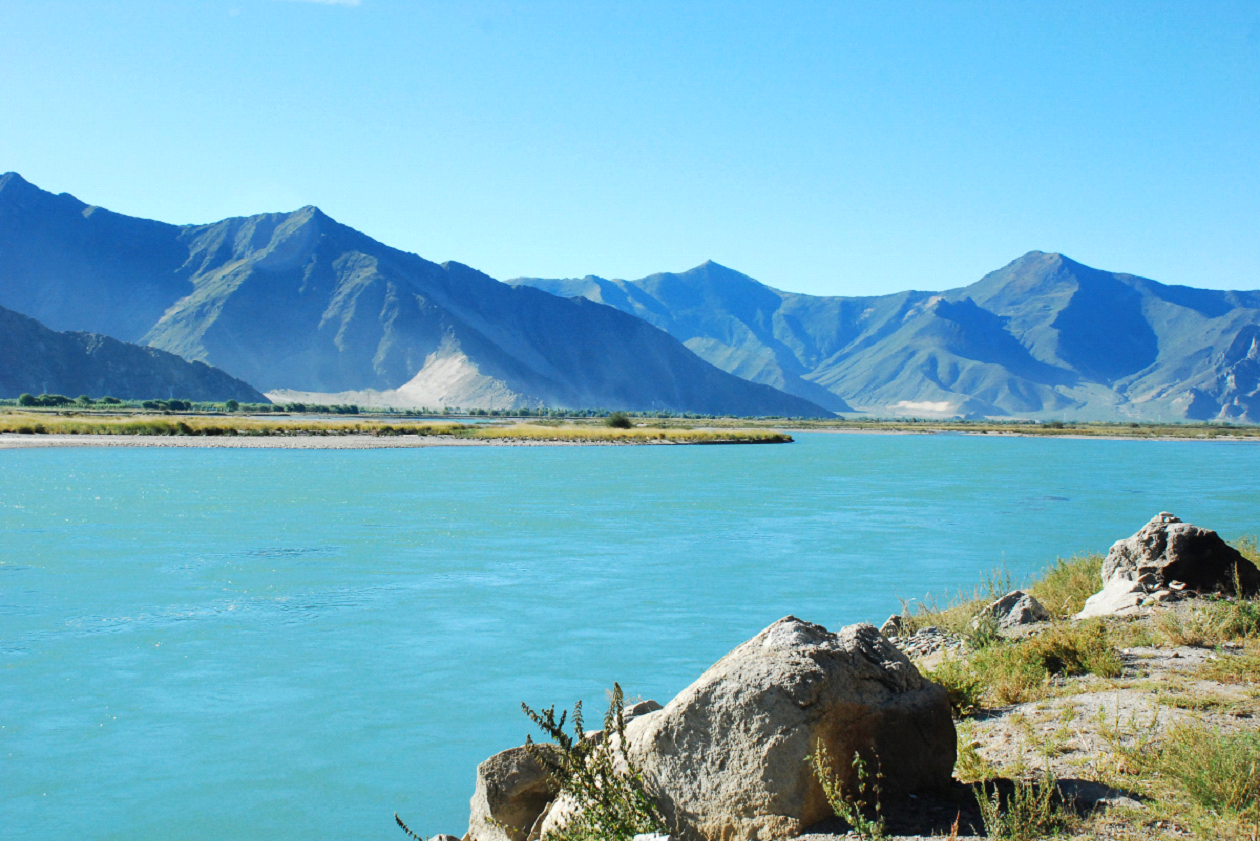
  • Stand before the luminous turquoise waters of Yamdrok Lake, considered a living deity and one of Tibet’s holiest lakes.
  • Explore a nearby glacier (weather permitting) to witness the Himalayan forces that shape both Tibet’s climate and its spiritual imagination.
  • Enjoy a serene Lhasa River cruise, seeing the city’s monasteries and mountains from a peaceful new vantage point.
  •  Visit the venerable Drak Yerpa caves, once home to hermits, monks, kings, and yogis seeking enlightenment.
  • Hang vibrant prayer flags at a high mountain pass — a timeless gesture of goodwill carried on the Himalayan winds.
  •  Attend the spectacular open-air performance of Princess Wencheng, an operatic retelling of the 7th-century alliance that helped usher Buddhism into Tibet.
  • Experience Tibetan culture not as a display — but as a living, breathing way of life during its most sacred season.
  • Stay at the St. Regis Lhasa Resort, featuring in-room oxygen systems, refined Tibetan-inspired design, panoramic Potala Palace views, and exceptional dining — ensuring comfort, restoration, and peace throughout your journey.

A travel experience like no other

Curated journeys of festivals, celebration, culture, and exclusive experiences

  • Join Tibetans in the sacred observances of Saga Dawa, when positive actions are believed to yield one hundred million times more merit.
  • Participate in powerful rituals including Sang (juniper smoke) offerings, butter-lamp ceremonies, and the compassionate tsethar fish-release tradition.
  • Walk through centuries of Tibetan spiritual and political history inside the Potala Palace, former winter residence of the Dalai Lamas.
  • Experience the deep devotion of Jokhang Temple, Tibet’s most sacred shrine, home to the exquisitely revered Jowo Sakyamuni statue.
  • Join pilgrims on the Barkhor and Lingkor kora circuits, living traditions that reveal the essence of Tibetan faith.
  • Discover the vast intellectual legacy of Drepung Monastery, once the largest monastic university in the world.
  • Visit Nechung Temple, spiritual seat of the State Oracle who once advised Dalai Lamas and Tibetan rulers.
  • Witness the dramatic courtyard debates of Sera Monastery, where monks sharpen philosophical reasoning with dynamic gestures and rhythmic claps.
  • Learn the sacred geometry and symbolism behind Buddhist art in a Thangka painting workshop on Barkhor Street.
  • Enjoy a thoughtfully prepared vegetarian meal, honoring the Saga Dawa tradition of non-harm and mindful living.
  • Stand before the luminous turquoise waters of Yamdrok Lake, considered a living deity and one of Tibet’s holiest lakes.
  • Explore a nearby glacier (weather permitting) to witness the Himalayan forces that shape both Tibet’s climate and its spiritual imagination.
  • Enjoy a serene Lhasa River cruise, seeing the city’s monasteries and mountains from a peaceful new vantage point.
  •  Visit the venerable Drak Yerpa caves, once home to hermits, monks, kings, and yogis seeking enlightenment.
  • Hang vibrant prayer flags at a high mountain pass — a timeless gesture of goodwill carried on the Himalayan winds.
  •  Attend the spectacular open-air performance of Princess Wencheng, an operatic retelling of the 7th-century alliance that helped usher Buddhism into Tibet.
  • Experience Tibetan culture not as a display — but as a living, breathing way of life during its most sacred season.
  • Stay at the St. Regis Lhasa Resort, featuring in-room oxygen systems, refined Tibetan-inspired design, panoramic Potala Palace views, and exceptional dining — ensuring comfort, restoration, and peace throughout your journey.
Day 1
  • Ceremonial khata welcome
  • Scenic transfer through Lhasa Valley
  • Gentle acclimatization at The St. Regis
  • First views of the Potala Palace
Day 2
  • Explore Drepung Monastery, once the largest monastic university in Tibet and a key cradle of Gelug scholarship.
  • Visit Nechung Temple, historic seat of the State Oracle, and learn how divine counsel once guided Tibetan leaders.
  • Gain a deeper historical framework for Saga Dawa at the Tibet Museum, with artifacts spanning royal courts, monasteries, and everyday life.
  • Experience how monastic learning, oracular tradition, and state history interweave in Tibetan culture.
Day 3
  • Stand inside the Potala Palace, historic winter residence of the Dalai Lamas and a UNESCO World Heritage Site.
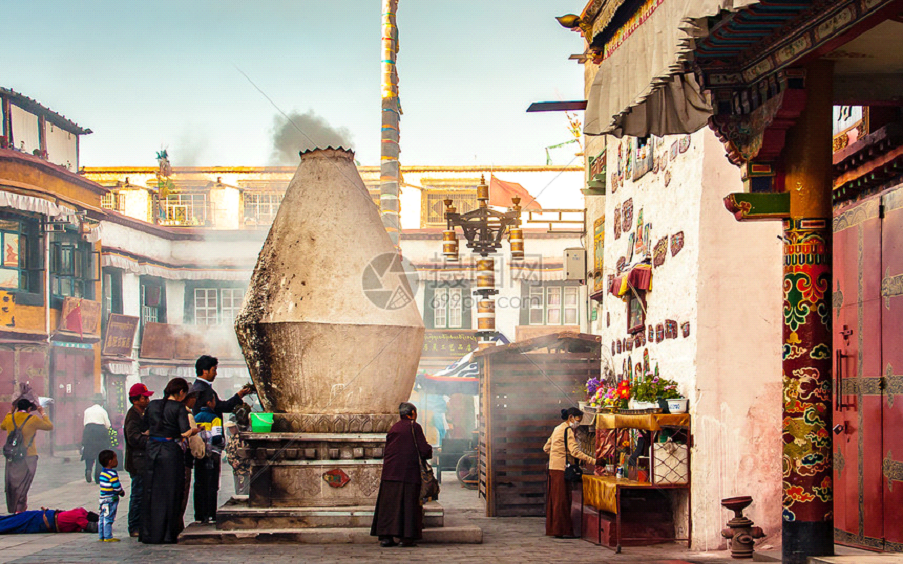
  • Participate in a Sang offering outside Jokhang, burning juniper as a purification and merit-making ritual during Saga Dawa.
  • Offer a butter lamp before the Jowo Sakyamuni statue, joining a 1,300-year-old current of continuous prayer.
  • Walk the Barkhor kora alongside pilgrims from across Tibet, observing living traditions of circumambulation and mantra recitation.
  • Learn the basics of Thangka painting, discovering how Buddhist cosmology and symbolism are encoded in sacred art
Day 4
  • Explore Drak Yerpa’s ancient meditation caves, associated with Guru Padmasambhava and Songtsen Gampo.
  • Hang prayer flags at Nak Pass, sending blessings and mantras into the wind during Saga Dawa.
  • Share a vegetarian Saga Dawa lunch, learning how ethical eating connects to merit-making in Tibetan Buddhism.
  • Participate in a fish-release ritual on the Lhasa River, a powerful act of compassion central to Saga Dawa observances.
  • Enjoy a peaceful river cruise, taking in Lhasa’s skyline and sacred surroundings from the water.
  • Be immersed in Tibet’s origin story at the “Princess Wencheng” open-air performance of history, myth, and cultural exchange.
Day 5
  • Walk part of the Lingkor pilgrimage circuit, surrounded by chanting pilgrims, prayer wheels, and juniper offerings.
  • Witness Saga Dawa’s heightened devotional energy as Tibetans from across the plateau converge on Lhasa.
  • Explore Sera Monastery, one of Tibet’s most important Gelug university monasteries.
  • Observe the monastic debates, a living tradition where philosophy, logic, and performance merge in the service of understanding the Dharma.
  • Gain deeper insight into how Tibetans balance faith, critical inquiry, and daily practice within the Saga Dawa season
Day 6
  • Witness the turquoise expanse of Yamdrok Lake, one of Tibet’s three most sacred lakes.
  • Learn how holy lakes function as deities, oracles’ mirrors, and pilgrimage destinations in Tibetan belief.
  • Enjoy time for meditation or quiet contemplation along the lakeshore.
  • Visit a nearby glacier (seasonal), appreciating both its beauty and its importance to local ecology and climate.
  • Travel through classic high-altitude scenery of prayer-flag-lined passes, yak pastures, and mountain vistas.
Day 7
  • Savor a final unhurried breakfast with views of Lhasa’s sacred skyline.
  • Receive assistance with airport or rail check-in and formalities from your local guide.
  • Reflect on a week immersed in Tibet’s holiest month, from Sang offerings and circumambulations to fish release and festival rituals.
  • Depart with a final khata blessing, carrying the peace and intentionality of Saga Dawa into your onward journey.
Day 1

Lhasa Arrival

Arrive in Lhasa and transfer to your luxury hotel. The remainder of the day is for acclimatization and gentle exploration

Upon arrival at Lhasa Gonggar Airport or the railway station, you’ll be warmly greeted by your Tibetan guide and presented with a traditional khata scarf — a symbol of pure intention and auspicious beginnings. As you journey into the valley, watch the landscape shift from riverbanks to white-walled homes and prayer flags fluttering in the high-altitude sun.

After settling into The St. Regis Lhasa Resort, take the day slowly. Hydrate well, rest, and allow your body to adjust to 3,658 meters. Step onto the terrace for your first glimpse of the distant Potala Palace glowing in soft evening light — a preview of the spiritual week ahead.

Hotel:
The St. Regis Lhasa Resort

  • Dinner
Day 2

Drepung Monastery & Nechung Temple Visit, Tibet Museum

Discover the intellectual and political heart of old Tibet as you explore Drepung Monastery, once the world’s largest monastic university; Nechung Temple, seat of the State Oracle; and the Tibet Museum, which places Saga Dawa’s living traditions in the context of over a thousand years of history.

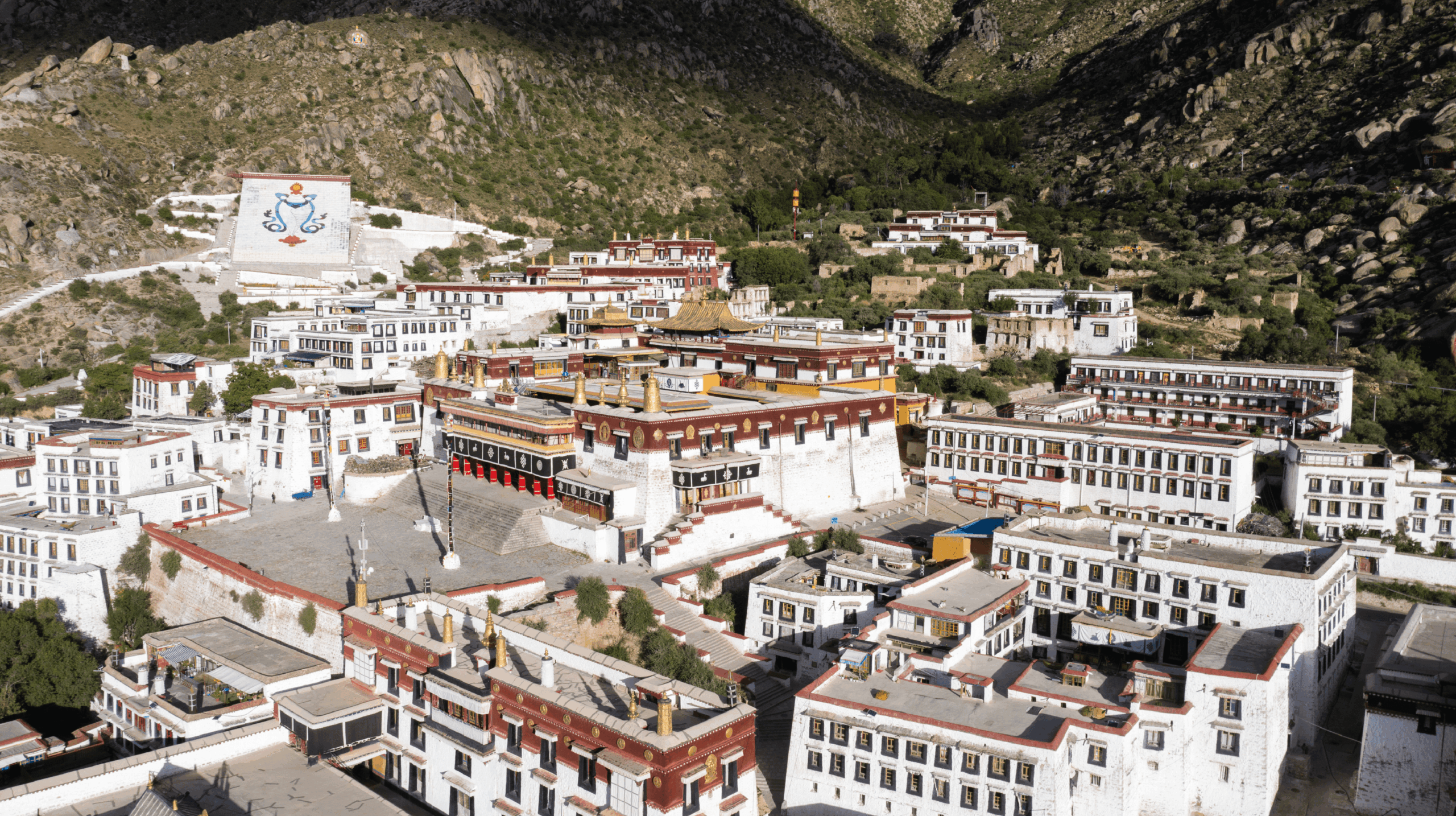
This morning, you drive to the terraced slopes west of Lhasa to visit Drepung Monastery, whose name means “Rice Heap”—a reference to the way its whitewashed buildings spill down the hillside like cascading grains. Founded in the 15th century, Drepung became the premier monastic university of the Gelug school, once housing more than 10,000 monks. From the 2nd to the 5th Dalai Lama, enthronement ceremonies were held here, firmly linking Drepung to Tibetan spiritual and political authority.

You’ll wander through sunlit courtyards, assembly halls thick with the scent of butter lamps, and chapels lined with centuries-old scriptures. Your guide will explain how monasteries like Drepung were not only spiritual centers but also hubs of philosophy, astronomy, medicine, and law, where generations of scholars trained in rigorous debate and logic.

A short drive brings you next to Nechung Temple, historically known as the seat of the State Oracle of Tibet. Here, spirit mediums once entered trance to advise Dalai Lamas and the government on matters of war, diplomacy, and religious policy. As you step past guardian deities and murals depicting visionary experiences, your guide will share how oracular consultation blended with statecraft in pre-1959 Tibet—offering a vivid window into a worldview where the seen and unseen interwove in daily governance.

In the afternoon, you return to Lhasa to visit the Tibet Museum, where carefully curated exhibits trace the evolution of Tibetan civilization—from early Yarlung kings and the arrival of Buddhism in the 7th century, through the rise of monasteries and regional kingdoms. Thangkas, ritual instruments, royal seals, armor, and manuscripts provide tangible context for the temples and rituals you’ll encounter during Saga Dawa. By day’s end, you’ll better understand how faith, art, and politics shaped the culture that still animates the streets of Lhasa today.

Hotel:
The St. Regis Lhasa Resort

  • Breakfast
  • Lunch
  • Dinner
Day 3

– Potala Palace, Jokhang Temple with Sang Offering & Thangka Painting on Barkhor Street

Walk into the symbolic heart of Tibet at the Potala Palace and Jokhang Temple, then join a traditional Sang offering and butter-lamp ritual before learning the sacred visual language of Buddhism in a Thangka painting workshop on Barkhor Street.

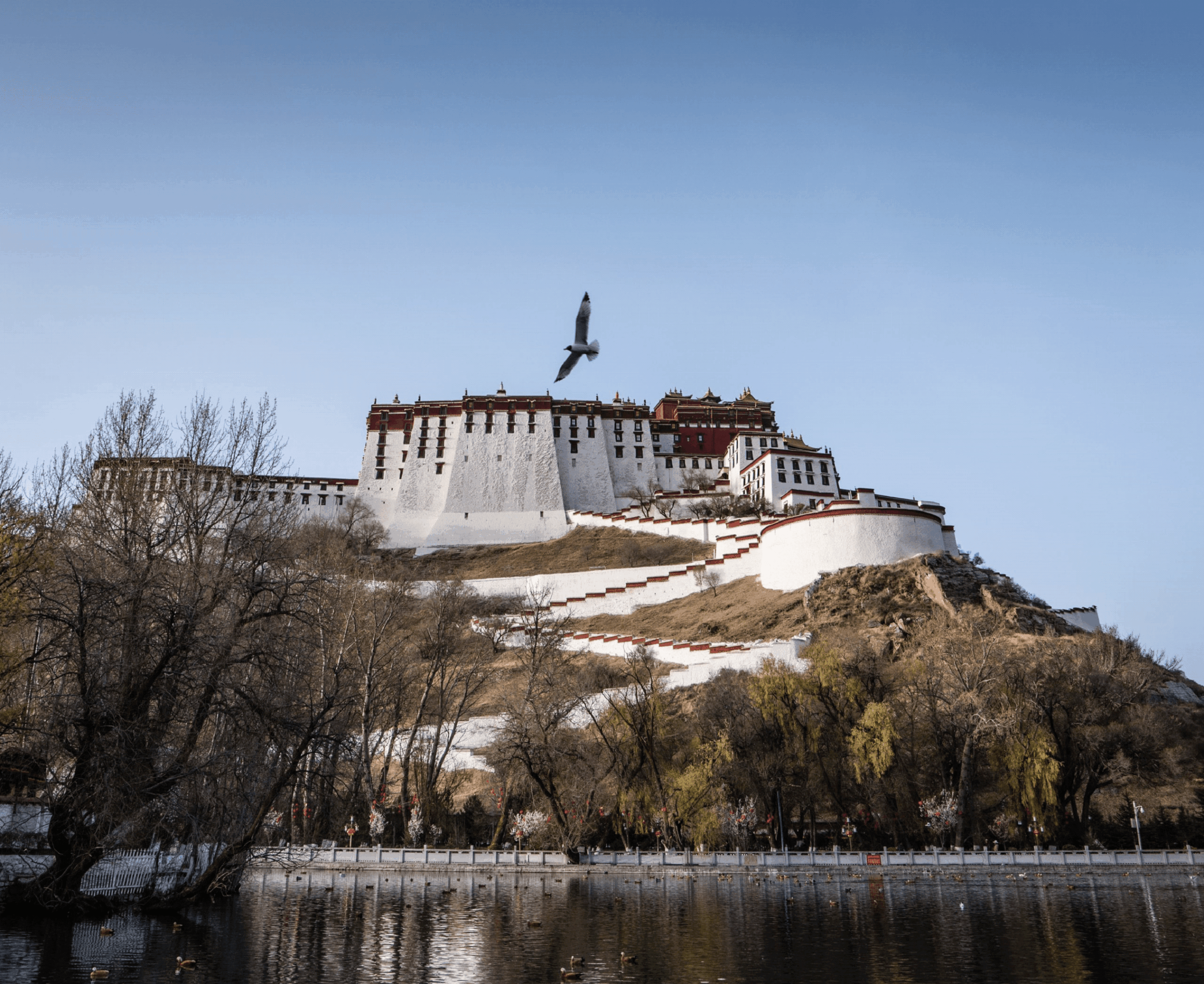
This morning begins atop Marpo Ri (Red Hill) at the Potala Palace, the 17th-century masterpiece that became the winter residence of the Dalai Lamas and the central seat of political and spiritual power in Tibet. Rising in layers of white and red walls, Potala is both fortress and mandala—its chapels filled with gilded stupas, relics of past Dalai Lamas, and murals recounting the spread of Buddhism across the plateau. Your guide will help you trace the palace’s dual role: as a sacred residence of Avalokiteshvara’s human embodiment (the Dalai Lama) and as the nerve center of a theocratic state. From its upper terraces, you’ll gaze across Lhasa and the surrounding mountains, seeing the city much as pilgrims have for centuries.

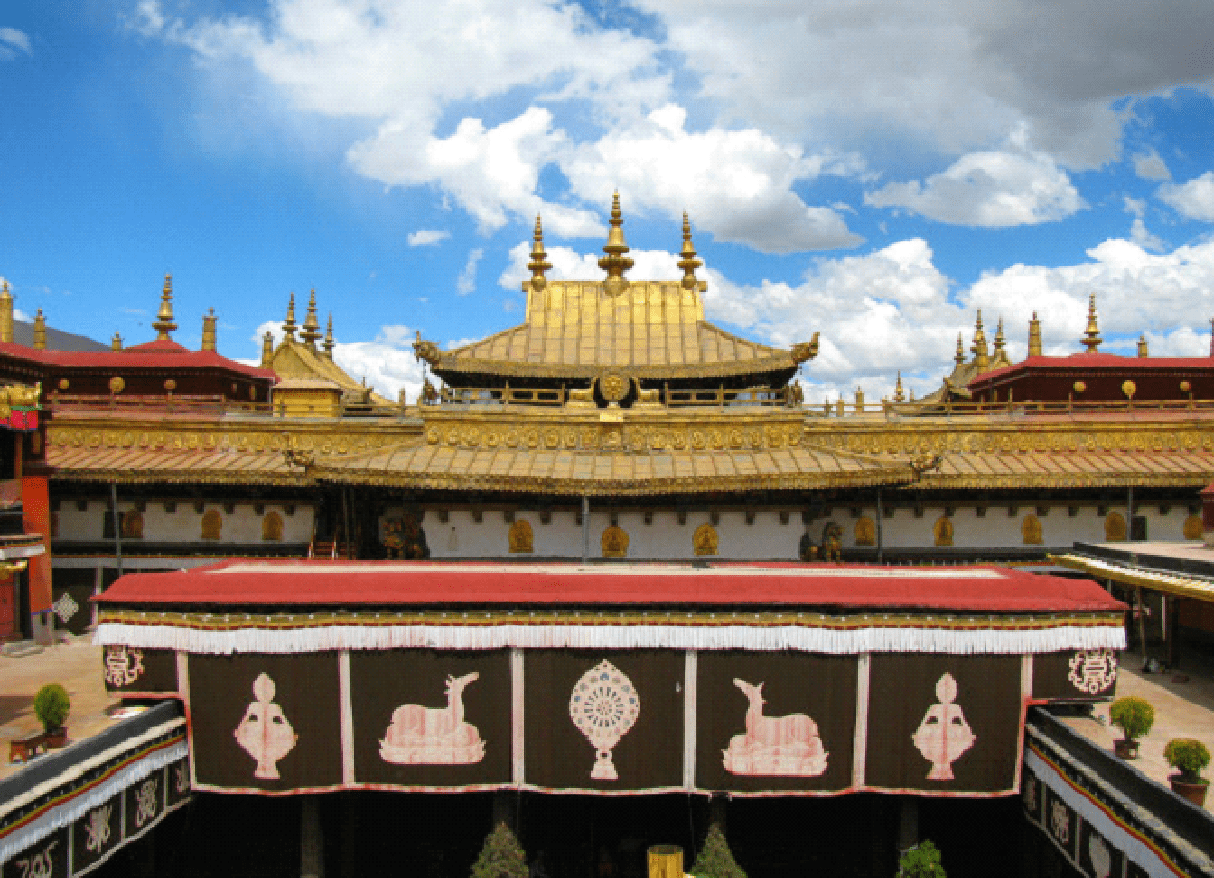
In the afternoon, you step into the timeless flow of devotion at Jokhang Temple, considered the most sacred shrine in all of Tibet. Built in the 7th century by King Songtsen Gampo, Jokhang enshrines the revered Jowo Sakyamuni statue—a depiction of the Buddha at age twelve, believed by many Tibetans to be the most precious image in existence.

Before entering, you’ll participate in a traditional Sang offering outside the temple gates. Juniper and aromatic herbs are burned in a stone incense burner, sending plumes of fragrant smoke skyward; this act of purification and offering is especially meaningful during Saga Dawa, when merit from virtuous acts is believed to be multiplied one hundred million times. Inside, you’ll join pilgrims in offering butter lamps, each tiny flame symbolizing the light of wisdom overcoming ignorance.

Afterwards, you join the tide of devotees along the Barkhor kora, the ancient circumambulation route encircling Jokhang. Here, traders, pilgrims, and monks share the same narrow lanes, spinning prayer wheels, fingering malas, and murmuring mantras as they walk.

You’ll then step into a quiet studio just off Barkhor Street for a Thangka painting workshop. Guided by a local artist, you’ll learn how these sacred images follow precise geometric grids and symbolic color systems, encoding entire universes of meaning—deities, mandalas, and narratives of the Buddha’s life. Even as you practice a simple motif, your instructor will explain how Thangkas serve as meditation aids, teaching tools, and devotional offerings across Tibet.

Hotel:
The St. Regis Lhasa Resort

  • Breakfast
  • Lunch
  • Dinner
Day 4

Drak Yerpa Monastery, Prayer Flag Ritual, Lhasa River Activities & Princess Wencheng Show

Follow in the footsteps of hermits and masters at Drak Yerpa’s meditation caves, hang prayer flags at a mountain pass, share a vegetarian Saga Dawa meal, then return to Lhasa for a fish-release ritual, a tranquil river cruise, and the spectacular open-air “Princess Wencheng” performance.

Today you leave the city behind and travel northeast to Drak Yerpa, one of Tibet’s most revered meditation sites. For over a millennium, this cliffside complex of hermit caves and chapels has drawn yogis, lamas, and royalty—including Songtsen Gampo and Guru Padmasambhava, who are said to have meditated here. As you ascend paths lined with prayer flags, the valley opens beneath you: pale stone, blue sky, and the sound of wind carrying distant chimes. Inside the caves, faint murals, butter lamps, and old offerings hint at long years of solitary practice and whispered mantra.

En route or on your return, you’ll stop at Nak Mountain Pass to participate in the beloved tradition of hanging prayer flags. Each color represents an element—blue for sky, white for air, red for fire, green for water, yellow for earth—and printed prayers and mantras are believed to spread on the wind, blessing all beings. Performing this ritual during Saga Dawa, when merit is believed to be exponentially multiplied, adds special resonance: your intentions become part of a centuries-old continuum of aspiration and compassion.

Lunch today is a thoughtfully curated vegetarian meal, reflecting the widely observed practice in Tibet of avoiding meat during Saga Dawa as an expression of non-harm. Your guide will explain how everyday choices—diet, generosity, acts of kindness—are all considered methods of accumulating merit in this sacred month.

In the afternoon, you return to Lhasa and head to the Lhasa River for a poignant fish-release ritual. Working with locals, you’ll participate in freeing live fish back into the water—an act symbolizing the liberation of beings from suffering and the affirmation of all life. This practice is especially popular during Saga Dawa, when many Tibetans engage in tsethar, or life-release, to cultivate compassion and extend the span of their positive deeds.

A gentle boat cruise on the river follows, giving you time to reflect as the city’s monasteries and distant mountains drift by in soft light. As evening falls, you take your seat at the open-air “Princess Wencheng” performance, an epic theatrical retelling of the 7th-century marriage alliance between Tibetan King Songtsen Gampo and the Tang princess credited with helping bring Buddhism and Han cultural influences to Tibet. With elaborate costumes, large-scale choreography, and dramatic staging against the Lhasa night sky, the show offers a visually rich interpretation of how Tibetans understand their own early Buddhist and diplomatic history.

Hotel:
The St. Regis Lhasa Resort

  • Breakfast
  • Lunch
  • Dinner
Day 5

Lingkor Pilgrimage & Sera Monastery Debates

Join the flow of pilgrims on the Lingkor circumambulation route during Saga Dawa, then spend the afternoon at Sera Monastery, where centuries-old courtyard debates bring Tibetan Buddhist philosophy to vivid, kinetic life.

This morning invites you into the living heart of festival devotion. The Lingkor is the long circumambulation route encircling much of Lhasa, traditionally walked by pilgrims who wish to honor the city’s sacred geography in a single continuous circuit. During Saga Dawa, the Lingkor fills with Tibetans of all ages—from nomads in sheepskin to city families in their finest chubas—walking, chanting, and turning prayer wheels.

As you join the route with your guide, you’ll see Sang offerings burning at wayside shrines, juniper smoke rising in fragrant plumes. Many pilgrims will have journeyed days or weeks to be here, some performing full-body prostrations along parts of the route. Your guide will help interpret the symbols, gestures, and mantras you encounter, explaining how Saga Dawa is believed to multiply the fruits of every prayer and good deed. The walk becomes not just a physical path around the city, but a contemplative loop through the very meaning of devotion in Tibetan life.

In the afternoon, you visit Sera Monastery, founded in 1419 and famed as one of the three great Gelug monastic universities of Lhasa. After exploring its temples and chapels, you’ll gather in the shade of old trees in the debate courtyard, where monks in crimson robes engage in dynamic philosophical debates. One monk stands, clapping his hands sharply to punctuate each challenge; another sits, responding quickly to questions on logic, ethics, and Buddhist doctrine.

These debates are not staged for visitors—they are an essential part of monastic training, keeping analytical insight sharp and ensuring that faith is grounded in reasoned understanding. Watching them during Saga Dawa, when many Tibetans focus on study, reflection, and virtuous action, offers a compelling glimpse into how wisdom is cultivated alongside devotion.

Hotel:
The St. Regis Lhasa Resort

  • Breakfast
  • Lunch
  • Dinner
Day 6

Yamdrok Lake & Glacier Exploration

Travel beyond Lhasa to the turquoise expanse of Yamdrok Lake, one of Tibet’s three most sacred lakes, and continue on to a nearby glacier—linking the region’s spiritual geography with its dramatic high-altitude environment.

Today’s full-day excursion steps outside the city into the wider sacred landscape of the Tibetan plateau. Your route climbs through switchback mountain passes, prayer flags snapping overhead, until the first breathtaking view of Yamdrok Tso appears below—a vast turquoise lake coiled between snow-capped ridges. Revered as one of Tibet’s three great holy lakes, Yamdrok is considered a living deity and a source of life-giving power. Many Tibetans believe its waters nourish the fertility of the entire region.

From a panoramic viewpoint, you’ll have time to absorb the scale and color of the lake before descending to its shore. Here, you can walk quietly along the pebbled edge, watch yaks graze on distant slopes, and perhaps see local pilgrims making offerings or circumambulating parts of the shoreline. Your guide will explain how lakes like Yamdrok are woven into pilgrimage circuits, oracles’ visions, and protective deities that shape Tibetan cosmology.

A scenic drive then leads toward a nearby glacier (access and visibility dependent on seasonal conditions), where masses of ancient ice descend in frozen cascades from the flanks of the mountains. Standing here, you’ll not only take in the stark beauty of the high Himalaya, but also hear about the ecological significance of these glaciers and how climate change is altering the landscapes that Tibetan communities have relied on for centuries.

Throughout the day, there will be moments for quiet personal reflection—whether in the hush of a viewpoint, at the lakeshore, or beneath colorful prayer flags at a pass. By evening, you return to Lhasa enriched by a deeper sense of how Tibet’s sacred geography and natural environment are inseparably intertwined.

Hotel:
Qomo Langzong Hotel

  • Breakfast
  • Lunch
  • Dinner
Day 7

Farewell to the Roof of the World

Enjoy a final, reflective morning in Lhasa before your private transfer to the airport or railway station, departing Tibet with the blessings and clarity of Saga Dawa’s holiest days still fresh in your memory

On your last morning in Lhasa, you’ll enjoy a leisurely breakfast at The St. Regis Lhasa Resort, perhaps taking one final look toward the Potala or the mountains edging the valley. By now, the sounds of ringing bells, murmured mantras, and crackling juniper fires will feel familiar—a sensory tapestry you’ve moved within for a full week of festival time.

Depending on your departure schedule, your guide and driver will meet you at the hotel for your private transfer to Lhasa Gonggar Airport or the train station. As you drive along the Lhasa River and past distant temple roofs, your guide can answer last questions or simply share stories of how locals experience Saga Dawa year after year—as renewal, remembrance, and a chance to consciously shape the course of their lives through merit and intention.

At your departure point, you’ll receive a final khata blessing, a symbolic wish for safe travels and auspicious paths ahead. Though your journey through Tibet’s holiest month comes to an end, the impressions linger: pilgrims circling Jokhang by starlight, butter lamps glowing in dark chapels, prayer flags snapping above mountain passes, and the shared humanity of a festival dedicated to compassion, wisdom, and liberation


  • Breakfast
Day 1, Day 2 , Day 3 , Day 4 , Day 5

St. Regis Lhasa Resort — Lhasa

Serene and sophisticated, the St. Regis Lhasa sits above the old city with views toward the Potala’s gilded roofs and the snow-lined Himalaya beyond. Guest rooms blend warm Tibetan motifs with contemporary finishes; many frame courtyards strung with prayer flags or the resort’s tranquil meditation garden. Between monastery visits, unwind in the famed Iridium Spa (geothermal pool), sip afternoon tea in the winter lounge, and savor thoughtfully sourced Tibetan and pan-Asian cuisine in elegant dining rooms. Attentive but unobtrusive butler service rounds out a stay that feels restorative and quietly luxurious.

Day 6

Qomo Langzong Hotel — Gyantse

A gracious base in Tibet’s most atmospheric town, Qomo Langzong evokes Gyantse’s trading-route heritage with carved wood, traditional textiles, and soft, lantern-lit corridors. Spacious rooms are calm and comfortable, many with mountain or fortress vistas; public spaces feature local art and cozy nooks for tea after exploring Pelkor Chöde and the magnificent nine-tier Kumbum. Expect warm, personal hospitality, a menu featuring Tibetan classics alongside Chinese favorites, and the pleasure of returning each evening to a hotel that mirrors the town’s understated charm.

Inclusions

Small Group Of 2-16 Guests

Guaranteed Departurewith minimum 2 persons

All required Tibet Permits and Domestic Travel Documents

All Transport: Airport transfers and Private ground transport by clean, comfortable, air-conditioned sedan, minivan, or coach - based on group size.

Experienced Driver

Professional English-speaking local guide throughout the trip

Comfortable 3-Star Hotel or equivalent as not all hotels in Tibet are given formal star ratings

All Meals

All Entrance Fees

Exclusions

International flights to and from Lhasa

Pre and After Trip Any Accommodations

Optional Attractions that are not specified in the itinerary.

Medical Insurance (Recommended)

Personal Expenses like Laundry, Phone, Internet, Souvenirs

Alcoholic/Soda Beverages

Tips (discretionary): For Drivers and Guides (Optional but appreciated)

Tibet Travel Fact Sheet

    • Capital: Lhasa
    • Official Language: Tibetan, Mandarin Chinese
    • Currency: Chinese Yuan (CNY)
    •  Time Zone: UTC +8
    •  Passport must be valid for at least 6 months.
    • All foreign travelers require a Chinese visa AND a Tibet Travel Permit.
    • Permits must be arranged in advance through authorized Chinese travel agencies.
    •  Recommended vaccines: Hepatitis A, Hepatitis B, Typhoid, Rabies, and routine immunizations.
    • High altitude poses health risks; acclimatization is necessary.
    •  Carry altitude sickness medication as advised by your doctor.
    • Medical facilities are limited outside Lhasa.
  • Season Months Avg. Temp (°C/°F) Notes
    Winter Nov – Feb -10°C to 8°C (14°F to 46°F) Very cold, snowy in highlands
    Spring Mar – May 5°C to 15°C (41°F to 59°F) Cool, dry, windy
    Summer Jun – Aug 10°C to 22°C (50°F to 72°F) Mild, occasional rains
    Autumn Sep – Oct 7°C to 15°C (45°F to 59°F) Clear skies, best visibility
    •  Warm clothing for high altitudes, including thermal layers.
    •  Sturdy hiking boots.
    •  Sunglasses and sunscreen for strong UV rays.
    • Reusable water bottle and purifier tablets.
    •  Power adapter (Type A, C, I plugs, 220V).
    •  Personal medications and altitude sickness remedies.
    •  Main international airport: Lhasa Gonggar International Airport
    • Domestic flights: Flights connect Lhasa with Beijing, Chengdu, Xi’an, Kathmandu (Nepal), and other major Chinese cities
    • Air travel is the primary means of connecting major regions for tourists.
    •  Voltage: 220V, Frequency: 50Hz
    • Plug types: Type A, C, I
    • Universal adapters recommended.
    •  Tipping is not a traditional custom but appreciated in tourist services.
    •  Guides: $10–20 per person/day.
    • Drivers: $5–10 per person/day.
    •  Hotels: Small tips for porters and staff.
    •  Tibetan cuisine is simple, hearty, and suited for high altitudes.
    •  Staples include tsampa (roasted barley flour), yak meat, and dairy products.
    • Yak butter tea is widely consumed.
    • Vegetarian options limited but available in larger towns.
    •  Respect Buddhist traditions and monasteries.
    •  Always walk clockwise around monasteries and stupas.
    •  Photography may be restricted in religious sites—ask before taking pictures.
    • Avoid touching people’s heads or pointing feet at sacred objects.
    •  Internet access is restricted and monitored.
    • ATMs limited; carry sufficient cash (Chinese Yuan).
    • Mandarin widely spoken; English limited outside tourist areas.
    •  Altitude adjustment is crucial—plan rest days.