Day 4
Lhasa sightseeing - Shoton Festival Activities Day 2
Immerse yourself in the Shoton Festival at its most vibrant. Take in the excitement of horse and yak races at the Lhasa Race Course, enjoy a live performance of traditional Tibetan opera in the willow-shaded gardens of Norbulingka—the former Summer Palace of the Dalai Lamas—and round out the day at the Tibet Museum, where Tibet’s art, history, and living culture come into focus
Today brings you deeper into the celebratory heart of the Shoton Festival, a day that showcases Tibet’s artistry, athleticism, and community spirit.
Your morning unfolds at the Lhasa Race Course, where the highland air crackles with anticipation. Horsemen and yak riders, dressed in vivid silks and traditional finery, thunder across the field to cheers from the stands. These races are far more than spectacle: they reflect Tibet’s enduring nomadic heritage, its deep relationship with the land, and the prestige long associated with skilled horsemanship on the plateau.
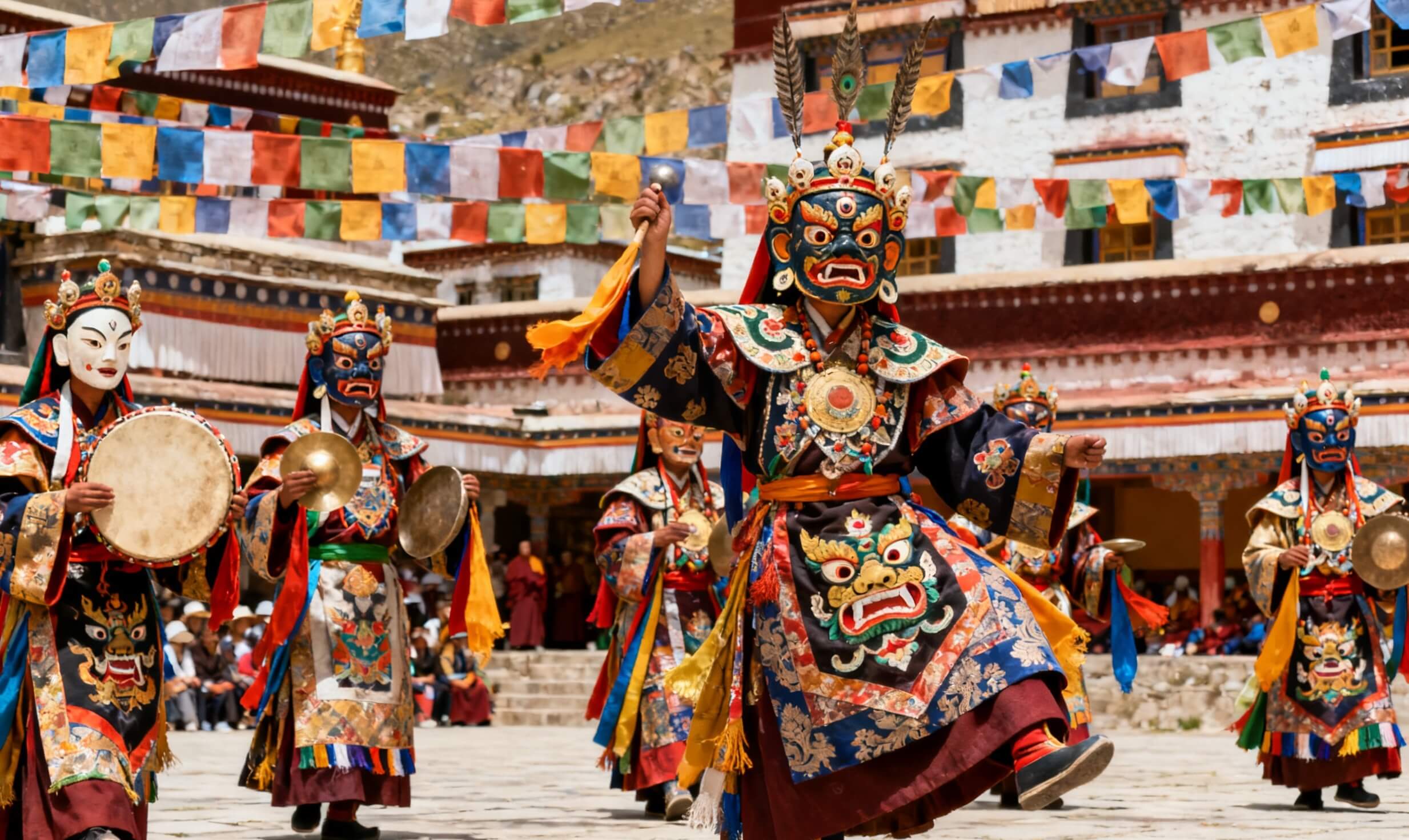
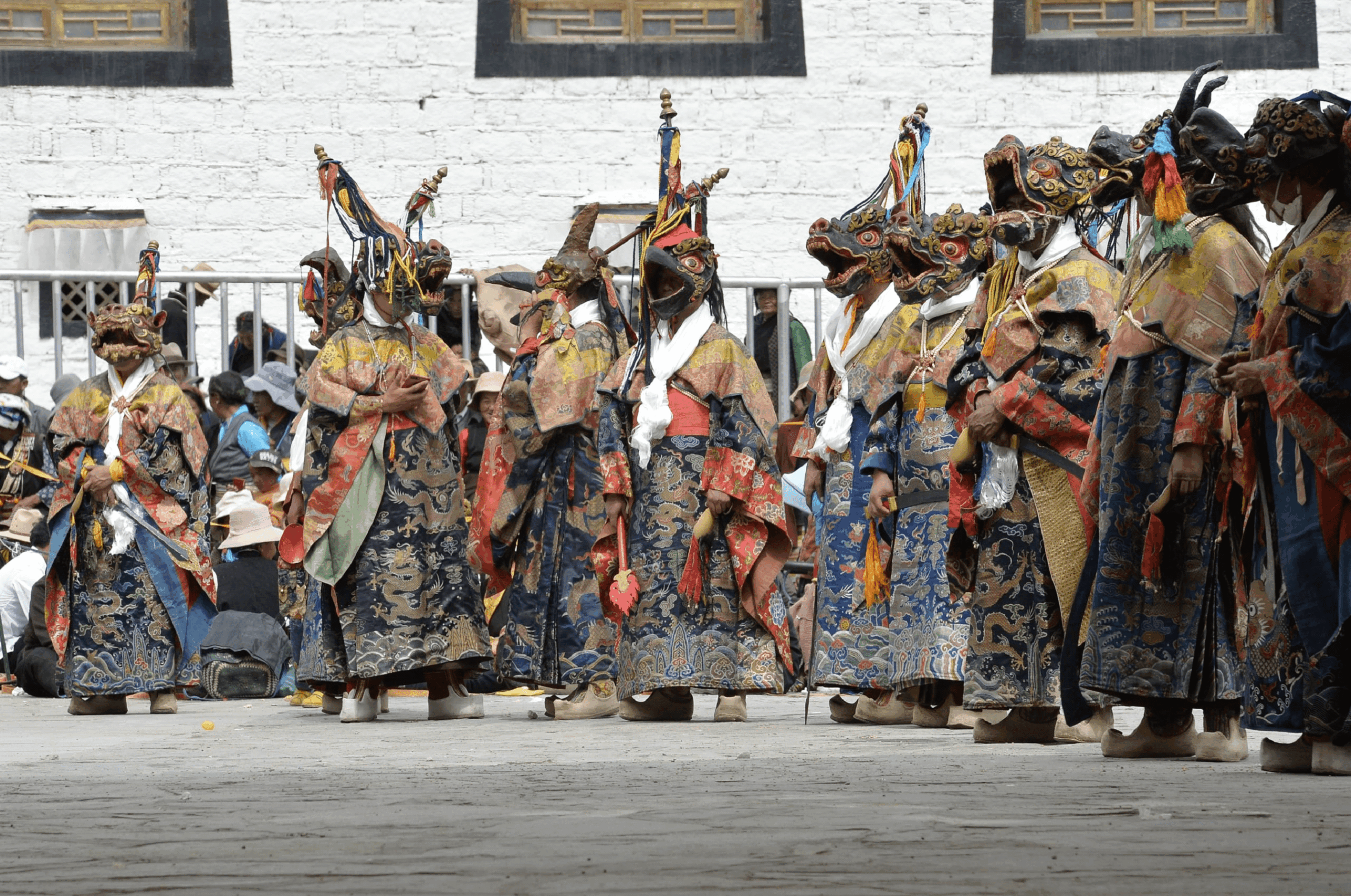
Later, you step into the leafy calm of Norbulingka, the former Summer Palace of the Dalai Lamas, first developed in the 18th century under the Seventh Dalai Lama. Its lawns, willow groves, and pavilions provide a serene backdrop for one of the festival’s most cherished cultural traditions: Tibetan opera (Lhamo). Here, performers in jeweled masks and brocade costumes enact age-old stories of heroes, deities, and moral quests. Accompanied by drums, cymbals, and haunting vocals, the performance weaves together history, spirituality, and theater in a uniquely Tibetan form of storytelling.
In the afternoon, you visit the Tibet Museum, a thoughtfully curated introduction to the region’s cultural and historical tapestry. Exhibits of thangkas, ritual objects, manuscripts, and traditional dress trace Tibet’s evolution—from its early kingdoms and Buddhist flowering to its rich regional traditions. As you move through the galleries, the monasteries, ceremonies, and festival moments you’ve witnessed over the past days fall into place, revealing a deeper understanding of the culture that animates modern Lhasa.
By day’s end, the sound of festival music and distant cheers mingle with the rustle of prayer flags in the wind—a fitting close to your second day inside Tibet’s most beloved celebration
Hotel:
The St. Regis Lhasa Resort